Tuesday, 30 August 2022

Jordan and Israel's November elections

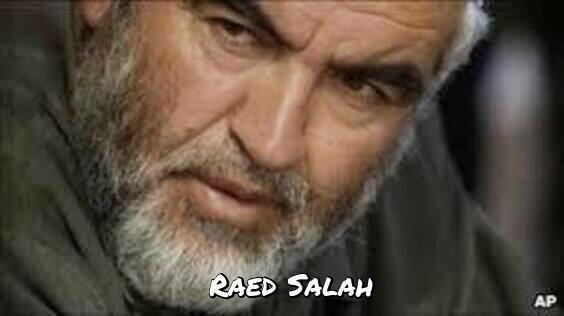
Various media reports are suggesting that the Jordanian government is intent on urging Israeli Arabs to vote in the November elections, the aim being to keep Benjamin Netanyahu from returning to power.  In particular, Jordan is said to have held unofficial talks with Muslim Brotherhood leaders recently, in an attempt to dissuade Raed Salah from boycotting the elections, as the northern branch of the Islamic Movement has historically done.

Raed Salah, a Palestinian citizen of Israel and former head of the northern Islamic Movement, is a prominent religious and political figure who was arrested first in 2017 and then again in 2020.  Although charged with *incitement to terror”, eight of the original twelve charges against him were dropped, and his sentence of 28 months imprisonment took into account the 11 months he had been detained awaiting trial.  He was released from Megiddo prison in December 2021.

   A former mayor of Umm al-Fahm, the popular 64-year-old Salah is known as “Sheikh al-Aqsa” – a title acquired when he was arrested during a demonstration protesting at the installation of metal detectors at the outer gates of the Al-Aqsa Mosque compound, following an attack there.

    On August 18 the controversial Middle East Eye, the London-based online news outlet, reported a well-placed, but anonymous, source claiming that Jordanian authorities had been trying to engage with Raed Salah through the Muslim Brotherhood, hoping to persuade him to urge his supporters to participate in the November Israeli elections, or at least not encourage them to boycott them.

This story was partially confirmed by Jordanian journalist Bassam Badarin, who reported some weeks ago in the London-based Al-Quds Al-Arabi newspaper that he had been asked by Jordanian officials about the best way to make contact with Salah.  Recently, virtually confirming that the parties had been in touch, Badarin wrote that the main focus of the unofficial talks had been to find ways to increase voter turnout among Palestinian citizens of Israel in the November vote.

 "Jordan's interest,” Badarin is reported as saying, “is similar to that of Lapid and Washington, who do not want to see Netanyahu back in power, since he represents a return to Trump's 'deal of the century,' which was rejected by Jordan.”

However Raed Salah’s media office moved quickly to quash the story. "There is no truth to the media reports that talk about communication between Jordan and Sheikh Raed Salah,” it announced. ”Our position is clear in support of the boycott of the Israeli Knesset elections."

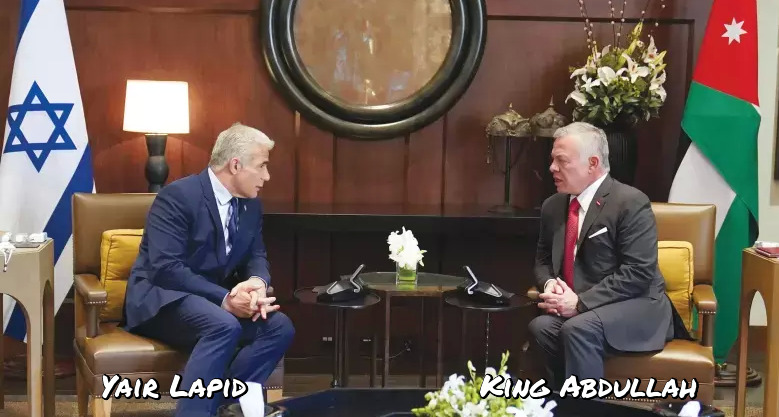
There is a certain logic in assuming that Jordan’s King Abdullah would prefer to see Yair Lapid returned to government as Israel’s next prime minister, heading a coalition supported by Raam (the United Arab List) but also by other Israeli-Arab parties. 

However, the idea that Abdullah would seek to manipulate the Arab vote by an appeal to Raed Salah does stretch credulity.  Raam, which is associated with the southern branch of the Islamic Movement in Israel, broke from Salah’s northern branch over the very issue of political participation in the Knesset and the Oslo Accords.

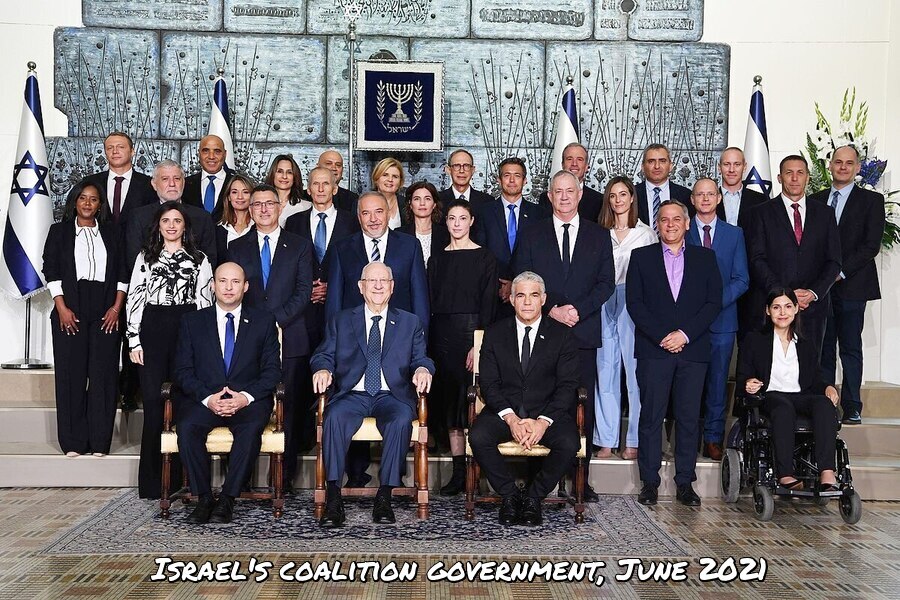
The Joint List was formed shortly before the 2015 elections, combining candidates from three Arab parties and the veteran Israeli party, Hadash. The list won 13 seats on that occasion, 13 in the 2019 election, and 15 in 2020.  It was prior to the 2021 elections that Raam left the alliance, secured four seats and became part of the coalition government.  The Joint List won six and joined the opposition.  Jordan may consider its interests are best served by disengaging what remains of the Joint List from its association with Israel’s right-wing coalition.

Few would object if the Jordanians simply choose to encourage Israeli Arabs to vote in the forthcoming elections.  However anything which smacked of urging them to vote for a particular party would certainly be deemed unacceptable interference in Israel’s democratic process.  It is this aspect of the media reports about Jordan’s recent involvement that is most disturbing.

Yet scraps of evidence in the media do seem to point in that direction.  Zaki Bani Irsheed, the former general secretary of the political wing of the Muslim Brotherhood in Jordan, is quoted as saying recent Jordanian actions stem from the desire to "stop Netanyahu from returning to power."   He was referring to a recent visit to Jordan by Khaled Meshaal, head of Hamas's diaspora office.  Jordanian officials and Muslim Brotherhood representatives insisted that Meshaal's rare visit was purely personal.  However, a Muslim Brotherhood spokesperson said this visit was different from previous personal ones in that he "was allowed to meet with Jordanian political and media personalities".

There are also reports that Jordan has sought to communicate with Mansour Abbas, leader of Raam and deputy head of the southern chapter of the Islamic movement.  One commentator asserted "Mansour was recently a guest of King Abdullah twice. One was an official visit, but the other meeting was not announced." 

In short, Amman seems engaged in an effort to reconcile the remaining Joint List with Raam and the southern Islamic branch.  Bringing Raed Salah on side seems a lost cause, but regardless of that Jordan may be hoping to ensure that a joint Arab political effort in the forthcoming elections is directed towards tilting the political balance away from Netanyahu, Likud and the Israeli right, and in favour of Yair Lapid and whatever coalition he can muster. If a united Joint List supporting Lapid managed to achieve 15 Knesset seats as in 2020, anything might be possible.


Published in the Jerusalem Post, 30 August 2022, and in the Jerusalem Post on-line under the title "What does Jordan have to do with Israel's November elections?":
https://www.jpost.com/opinion/article-715870

Published in Eurasia Review, 10 September 2022:
https://www.eurasiareview.com/10092022-jordan-and-israels-november-elections-oped/

Published in the MPC Journal, 11 September 2022:
https://mpc-journal.org/jordan-and-israels-november-elections/


Monday, 29 August 2022

Nudging Jordan toward the Abraham Accords

            As Israel’s foreign minister, Yair Lapid is generally accounted a notable success.  Proactive by temperament, he seemed tireless in his efforts to improve Israel’s standing on the world stage.  He had been in office only a month before the UK’s prestigious Financial Times headlined a story: “Lapid’s whirlwind tour shows a different Israel to the world.”  The FT continued: “In just four weeks in office, Yair Lapid…has spent much of his time overseas, signaling a determination to set a new tone in foreign relations…”

            Lapid certainly hit the ground running.  In those first weeks he opened the first Israeli embassy in the United Arab Emirates (UAE), flew to Rome for a meeting with US Secretary of State Anthony Blinken, took a quick trip to Turkey, addressed the 26 EU foreign ministers in Brussels in an effort, which proved successful, to improve Israel’s relations with Europe, and met with his Jordanian counterpart, Ayman Safadi, at a crossing point over the Jordan River.

To restore trust and strengthen relations with Jordan was a high priority of the coalition government from the start.  Over 2021 all Israel’s senior leadership, including President Isaac Herzog, then-prime minister Naftali Bennett, then-foreign minister Yair Lapid, and defense minister Benny Gantz had meetings with Jordan’s King Abdullah II.

Following Lapid’s meeting with Safadi, the government announced it was to double Israel’s committed allocation of water to Jordan under the 1994 peace treaty. It also set a target to increase Jordan’s export potential to the West Bank from $160m to $700m a year. The two foreign ministers also agreed to raise a cap on Jordanian exports to the West Bank from $160 million to $700 million.

This first foray into strengthened Israeli-Jordanian collaboration was dramatically augmented in Dubai on November 22, 2021.  On that day ministers from Israel, Jordan, and the United Arab Emirates signed a landmark energy-for-water deal. They agreed that Jordan will build a large solar power plant in the desert, financed by the UAE, which will be used to generate electricity for the Israeli market. In return, Israel will develop another desalination plant and supply even more water to Jordan.

Under the deal, the solar plant will produce 600 megawatts of solar energy to be exported to Israel at a price of $180 million, the proceeds to be shared between the UAE and Jordan. The deal calls for the Jordanian solar farm to be operational by 2026 and produce two percent of Israel’s energy by 2030.  In exchange Israel will send 200 million cubic meters of desalinated water to Jordan. Other issues on the bilateral agenda included joint tourism in the Gulf of Eilat-Aqaba, food security, agriculture and transportation links.

As Israel’s foreign minister, Lapid maintained a punishing pace throughout 2021.  In August he was in Morocco, consolidating the kingdom’s signing of the Abraham Accords by reopening the Israeli Liaison Office in Rabat.  In September he was inaugurating the Israeli embassy in Bahrain and signing a list of new bilateral agreements.  In November he was in London meeting Britain’s prime minister, Boris Johnson, and its foreign minister Liz Truss, signing an agreement binding Israel and the UK in an ever-closer trade relationship.  He flew on to Paris to meet France’s President Emmanuel Macron to ensure that banking sanctions against Iran remained in place.

            In January 2022 he joined with Germany’s foreign minister, Annalena Baerbock, in ensuring the adoption by the UN of the Resolution against Holocaust Denial and Distortion.  In March he was in Romania, inaugurating an expedited Aliyah process for Ukranian refugees.  Later that month he hosted a visit to Israel by Singapore’s foreign minister, Dr Vivian Balakrishnan, who announced that after 53 years of ties with Israel, Singapore would open an embassy in Tel Aviv.  Only a few days before the coalition government collapsed, Lapid was in Turkey, consolidating the improved relationship with Israel fostered by Turkish president, Recep Tayyip Erdogan.

One could only hope that the impetus Lapid had given to improving Israel’s foreign relations in general, and relations with Jordan in particular, would be maintained once he assumed the role of interim prime minster for the period leading to the general election, scheduled for November 2022.  And so it has proved. At the weekly Cabinet meeting on July 31, Prime Minister Lapid announced that Israel and Jordan are to revitalize, expand and accelerate the implementation of the 'Jordan Gateway' project – the joint industrial zone between the State of Israel and the Hashemite Kingdom of Jordan.

Established in 2002 to facilitate the transport of products from and to America, Europe, the Middle East and the rest of Asia, the joint Israeli-Jordanian industrial zone extends over 1200 thousand square meters on the Jordanian side, and 270 thousand square meters in the Israeli side.  The reconceived Jordan Gateway industrial and employment park will be constructed in conjunction with the Emek Ha’Maayanot Regional Council at the northern end of the Jordan Valley. 

The idea of a joint industrial zone was first proposed during talks on the 1994 Israel-Jordan peace agreement, and the revitalized project was finally signed off at a meeting between Lapid and Jordan’s King Abdullah II in Amman in the last week of July 2022.

“Twenty-eight years since the peace agreement with Jordan,” said Lapid, “we are taking the good neighborly relations between our two countries another step forward.  This is a breakthrough that will contribute greatly to developing and strengthening the region.”  It will, he said, “increase employment in both countries, advance our economic and diplomatic relations, and enhance the peace and friendship between our two countries.” 

These are worthy objectives. and wholly in line with those inherent in the Abraham Accords.  In effect Jordan is lining up alongside the UAE and Bahrain to capitalize on the benefits that follow from a flourishing cooperative relationship with Israel. 


Published in the Jerusalem Post, 15 August 2022, and in Jerusalem Post online as: "Can Jordan be nudged toward the Abraham Accords?"
https://www.jpost.com/opinion/article-714709

Published in Eurasia Review, 31 August 2022:
https://www.eurasiareview.com/31082022-nudging-jordan-toward-the-abraham-accords-oped/

Published in the Jewish Review, 26 August 2022:
https://jewishreview.co.il/nudging-jordan-toward-the-abraham-accords-16375/

Published in the MPC Journal, 29 August 2022:
https://mpc-journal.org/nudging-jordan-toward-the-abraham-accords/

Published in Jewish Business News, 26 August 2022:
https://jewishbusinessnews.com/2022/08/26/nudging-jordan-toward-the-abraham-accords/

Sunday, 21 August 2022

Lapid speaks – is anyone listening?


It is not usual for the prime minister of Israel to speak directly to the Palestinian people, but Yair Lapid did exactly that on Monday evening, August 8.  With Operation Breaking Dawn well and truly concluded, thanks to the sterling efforts of Egyptian President Abdel Fattah al-Sisi in brokering a ceasefire, prime minister Lapid issued a statement about the operation.  Having emphasized Israel’s efforts to minimize harm inflicted on civilians, and deploring all civilian deaths especially those of children, Lapid changed direction and addressed himself to the people of Gaza.  This message he repeated in a video which he posted on Facebook.

“I want to speak directly to the residents of the Gaza Strip,” he said, “and tell them: There is another way. We know how to protect ourselves from anyone who threatens us, but we also know how to provide employment, a livelihood and a life of dignity to those who wish to live by our side in peace.  There is another way to live. The way of the Abraham Accords, of the Negev Summit, of innovation and prosperity, of regional development and joint projects. The choice is yours. Your future is in your hands.”

The presentation of his message may have been dramatic and unusual, but the content was not. It was entirely in line with the vision for a long-term settlement between Israel and the Gaza Strip that, as Israel’s foreign minister, he set out on September 12, 2021.

He was addressing a conference of the International Institute for Counter-Terrorism at Reichman University, a private university situated in Herzliya.  Dubbing his plan "economy for security", he was essentially proposing a pragmatic deal – the reconstruction of Gaza in exchange for the disarmament of Palestinian armed factions.

"Since Israel left the Gaza Strip in 2005,” said Lapid, “we have been dragged into round after round of violence causing suffering for our people and harming our economy. The policy Israel has pursued up until now hasn't substantially changed the situation. The closures haven’t stopped the smuggling and production of weapons. Last night we once again struck Gaza after yet another rocket was fired, and residents ran to their shelters. We need to change direction. What should we do? The short answer is that we need to start a large, multi-year process of economy for security. It is the more realistic version of what in the past was called 'rehabilitation for demilitarization.'"

Lapid explained that his plan encompasses two stages. The first will address the immediate humanitarian crisis in Gaza, tackling basic human needs there.

 "The electricity system will be repaired, gas will be connected, a water desalination plant will be built, significant improvements to the health-care system and a rebuilding of housing and transport infrastructure will take place. In exchange, Hamas will commit to long-term quiet."

The second stage includes a comprehensive economic jump-start for the Gaza Strip. Lapid proposed that "as part of the second stage the artificial island project off the coast of Gaza will be advanced, which will allow for the construction of a port. A transportation link between the Gaza Strip and the West Bank will be built. International investment inside Gaza and joint economic projects with Israel, Egypt and the Palestinian Authority [PA] will be advanced. Industrial and employment zones will be built near the Erez border crossing."

Lapid’s proposed way forward was not to attempt negotiating any of this directly with Hamas, but to gain international consensus on the plan, and then the support of a group of like-minded nations in persuading Hamas into accepting it.  Finally he added the message that he has now put directly to the Gazan population – that he hoped Gazans understood what they were missing out on as a result of terrorism, and that they realized how much they stood to gain if terrorism was ended.

Lapid emphasized that a plan like this had never before been presented officially by an Israeli government. It seemed clear from the earnestness with which he spoke, and the degree of detail he set out, that Gaza reconstruction was to feature in future Israeli regional policy.  Indeed, Lapid indicated that the process of implementing the policy had already started.  He revealed that in recent weeks he had held a series of conversations with partners in the Arab world and the West about his plan.

The reactions of Hamas and of the Palestinian Authority (PA) were entirely negative, but for different reasons.  Hamas viewed Lapid’s plan as a bribe aimed at buying off the support of Gazans for the “armed struggle”.

            “The enemy has resorted to various proposals in order to weaken the resistance,” said Hamas spokesperson Hazim Qasim. “Its resort to such a plan indicates its inability to deal with the resistance and our Palestinian people.”

            And yet there are some who believe that Hamas’s decision not to involve itself in the conflict between Islamic Jihad and Israel was precisely because of Israel’s recent policy of economic incentives for Gaza, including a substantial increase in the number of permits allowing Gazans to cross into Israel for work.

As for the PA, Lapid’s plan would see them take charge of implementing Gazan reconstruction on the ground. The PA, for whom the idea of cooperating with their regional rivals Hamas was, perhaps, a non-starter, saw the whole Lapid policy as an effort to bypass peace negotiations leading to a comprehensive resolution of the Israel-Palestinian dispute.

Speaking to the Palestinian cabinet, PA Prime Minister Mohammad Shtayyeh rejected the Lapid plan as half-baked.  He believed that the reconstruction of Gaza could only follow a full-scale peace accord. “Gaza’s problem is political,” he said. “There must be a serious political process based in international law, to end the occupation and lift the blockade… this would make the reconstruction of Gaza possible and sustainable.”

It was precisely this negative, blinkered, non-aspirational attitude of the Palestinian leadership that induced Lapid to address the Gazan people direct, and to pin his hopes on assembling sufficient international support to see his proactive plans for a reconstructed and thriving Gaza Strip made reality.

Published in the Jerusalem Post, and in the Jerusalem Post on-line as:"Prime Minister Yair Lapid speaks to Gazan civilians", 22 August 2022:
https://www.jpost.com/israel-news/politics-and-diplomacy/article-715230

Published in the International Jerusalem Post, 26 August-1 September, 2022

Published in Eurasia Review, 2 September 2022:
https://www.eurasiareview.com/02092022-lapid-speaks-is-anyone-listening-oped/

Published in the MPC Journal, 3 September 2022:
https://mpc-journal.org/lapid-speaks-is-anyone-listening/

Published in Jewish Business News under the by-line Edmund Owen, 2 Sept 2022:
https://jewishbusinessnews.com/2022/09/02/lapid-speaks-is-anyone-listening/


Iraq in political turmoil


On July 30 hundreds of supporters of Moqtada al-Sadr, one of Iraq's leading political figures, breached the parliament building in Baghdad's fortified Green Zone, forced their way inside, and started a coordinated sit-in to protest at the recent nomination of Mohammed Shia al-Sudani for the premiership.  Sixty protesters were injured in clashes with security forces.  Three days earlier a mass protest outside parliament by al-Sadr supporters had ended only after al-Sadr tweeted a request to them to disperse.

            Iraq has been in a political crisis ever since the general election last October.  Months of discussion and negotiation between the various political groupings has failed to result in the election of a president or prime minister, the essential precursors under the Iraqi system for the formation of a government.  Constitutionally the president, whose duty is to task the future prime minister with forming the new government, must be elected within 30 days of the election of the speaker of parliament.  Sunni lawyer Mohammed al-Halbousi was elected speaker on January 9, but the required election of a president within 30 days never happened.  Having a newly elected speaker and no president violates the constitution, but that seems a minor matter, given the political deadlock.
           

          On July 17 the febrile political atmosphere was rendered even more critical when an Iraqi journalist named Ali Fadel released on social media a set of secret recordings. In them a one-time prime minister of Iraq, Nuri al-Maliki, apparently gives vent to a succession of insults and accusations against al-Sadr.

As background, it is useful to know that al-Sadr, although a Shiite, leads a popular movement opposed to Iran’s excessive control of Iraqi affairs, while al-Maliki is a leading figure in a major Shia parliamentary grouping called the Coordination Framework, which is very much beholden to Iran.

The venom of al-Maliki’s apparent verbal onslaught against al-Sadr shook the nation.  The percentage of voters who believed al-Maliki’s rapid denial of ever saying the words attributed to him, and his assertion that the recordings were fake, is not known. What is certain, however, is that the recordings, genuine or false, removed al-Maliki’s chance of a return as prime minister    Al-Sadr himself dismissed them as of no consequence.

           In the recordings al-Maliki, Iraq’s prime minister from 2006 to 2014, apparently reveals a British plot to use al-Sadr as a disposable puppet in a scheme designed to hand Iraq over to Sunni control.  “That project exists,” al-Maliki seemingly says, “but I am fighting it, and it is to be fought politically and militarily.”  He apparently proceeds to cut al-Sadr to ribbons.  “Moqtada is a murderer… the kidnappings, the car bombs…he is a coward, a traitor, an ignoramus who knows nothing.”

In Iraq’s October 2021 general election the bloc led by al-Sadr won 74 seats, making it the largest grouping in the 329-seat parliament.  But on June 13, following months of ineffective negotiations and a total failure to nominate people to fill the high offices of state or to form a government, al-Sadr ordered the members of his bloc to resign from parliament. 

Under Iraqi law if an MP resigns, the second-placed candidate in the election takes the empty seat. The process of filling the vacated seats led to a new wave of intense debate and protests, but finally the pro-Iran Coordination Framework became the majority bloc in parliament.  It then nominated Mohammed Shia al-Sudani as prime minister.

 A succession of Iran-backed groups and militias welcomed the nomination; the Sadrist reaction was posted on a Facebook site.  Dubbing al-Sudani as nothing more than a facade for al-Maliki, al-Sadr was virtually declaring that as prime minister he would be al-Maliki’s puppet. Two days later, on July 27, the country’s political crisis reached boiling point and al-Sadr supporters stormed the Iraqi parliament protesting against al-Sudani’s nomination - a riot instantly quelled by a tweet from al-Sadr.

In the run-up to the election, al-Sadr had committed himself to forming a “national majority government” representing different sects and ethnicities, including Sunni and Kurdish groups but sidelining the pro-Iran Coordination Framework.  This commitment put al-Sadr at odds with the Fatah alliance, the political wing of the pro-Iran Popular Mobilization Forces militia. Some pro-Iran militia groups warned of intensified violence if Sunni and Kurdish groups joined an al-Sadr government.

If al-Sadr’s “national majority government” had succeeded, it would finally have put paid to Iraq’s so-called muhasasa political system, imposed on the country after the US-led invasion in 2003.  Akin in some respects to Lebanon‘s sectarian power-sharing structure – itself a continual source of political instability – muhasasa is an attempt to provide proportional representation in public office among Iraq’s various ethno-sectarian groups, including Shia, Sunni and Kurdish.  Many Iraqis believed from the start that the system was deeply flawed. It was soon widely perceived as underpinning the corruption, collusion and patronage networks that characterized public life in Iraq, and became the target of popular protests. Overturning muhasasa would have markedly reduced Iran’s political influence in Iraq.  If al-Sadr ever achieves political power, it may yet come to pass.

Did al-Sadr shoot himself in the foot by ordering the resignation of his 74 parliamentary followers in June?  Many of his vacated seats were filled by members of the Coordination Framework, and it might seem as though he had handed his political opponents the power to form a government. However the recent mass political protests by Sadrists clearly demonstrate that al-Sadr is far from a spent force.  It is obvious that with or without his parliamentary majority, al-Sadr with his vast supporter-base remains a force to be reckoned with, and will have to be take into account if Iraq’s political turmoil is ever to be resolved.


Published in the Jerusalem Post, and in the Jerusalem Post on-line as "Iraq's Sadr remains a force to be reckoned with", 8 August 2022:
https://www.jpost.com/opinion/article-714230

Published in Eurasia Review, 13 August 2022:
https://www.eurasiareview.com/13082021-iraq-in-turmoil-oped-2/

Published in the MPC Journal, 21 August 2022:
https://mpc-journal.org/wp-admin/post.php?post=13361&action=edit

Published in Jewish Business News, 18 August 2022:
https://jewishbusinessnews.com/2022/08/19/iraq-in-political-turmoil/

Thursday, 4 August 2022

The UK's new prime minister - who will it be?

This article appears in the Jerusalem Post weekend magazine, 12 August 2022

          Pity the Brits in Israel.  They’re not only caught up like the rest of the country in the trauma of Israel’s rotating prime ministers and the political posturings prior to November’s general election, but their emotions are also being thoroughly stirred by the battle in the UK between the candidates vying to replace Boris Johnson as Britain’s new prime minister.

          The reasons for Johnson’s fall sound vaguely familiar to Israeli ears.  Despite astounding electoral and, indeed, political successes, Johnson’s personal failings led to a widespread belief that he was unfit for his office. He blithely breached the Covid restrictions that his government had imposed on the population at large, and was fined by the police for doing so.  He misled parliament about that and related matters, and finally he promoted to a position of importance a man he had been told years before was a sex offender.  That proved the final straw.   His ministers started resigning en masse and he found himself unable to continue governing.

          And so Britain‘s arcane method for moving forward in such a situation was brought into play.  As is often pointed out, Britain does not possess a written constitution, and the rules governing political crises have evolved over time.  The system that brings a person to the position of UK prime minister, and thus head of the government, bears no resemblance to US presidential elections.  In the US system a candidate seeks a personal mandate from the American people; in Britain 650 constituencies each elect a member of parliament, and the leader of the largest party in parliament becomes prime minister.

           In short, it is the winning political party that secures the nation’s mandate to govern, not its leader. So if a leader is deposed, the party’s mandate to govern is not affected.  That is why the Conservative party is currently engaged in choosing a new leader who will automatically become Britain’s next prime minister.

           The party leadership devised a two-stage process.  In the first stage the eight parliamentarians who secured enough support to stand as potential candidates were whittled down by a series of elections to just two.  Rishi Sunak, once Johnson‘s finance minister, came out on top.  Second was Liz Truss, his foreign secretary. 

           The second stage involves the two selected candidates putting their case to the membership of the Conservative party, who will vote for their preferred choice in the period up to September 2. The exact number of Conservative party members is not precisely known, at least by the general public, but it is in the region of 180,000.  The winner – and thus Britain’s new prime minister – will be announced on September 5.

           There is, of course, a vociferous body of opinion within the UK that finds it unacceptable for the nation’s next prime minister to be selected by a handful of Conservative party members.  But the process, or something akin to it, has been used a fair number of times in recent years under both Conservative and Labour administrations, and it does accord with the basic principles underlying the British parliamentary system.

           Although the nation as a whole will have no say in the outcome, the fact that interviews of the candidates, and debates between them, are being broadcast on radio and TV, and splashed all over the print media, has turned the whole process into a national jamboree.

   Would a win by one or other of the candidates make a difference to UK-Israeli relations?  They have never been warmer than they are right now, and both candidates are pledged to enhance them.  The Conservative administrations of the past twelve years, and their changing leaders, have been notably friendly toward Israel, encouraging ever-closer collaboration.  On July 20 the UK trade minister launched negotiations between the UK and Israel for a new, innovation-focused trade deal.

The groundwork for this was laid by Yair Lapid in his visit to the UK in November 2021.  He and foreign secretary Liz Truss struck up a warm relationship right from the start. The close Israeli-UK understanding was demonstrated to the world on November 29 when the Daily Telegraph achieved a journalistic coup – an article written jointly by the British and Israeli foreign ministers, Liz Truss and Yair Lapid. 

Headed: “Together we can propel both our nations to safety and prosperity”, the piece heralded a new UK-Israeli agreement, to be signed later that day, which they described as “a major step forward, transforming our close friendship into an even closer partnership by formally agreeing a new strategic plan for the next decade spanning cyber, tech, trade and defense.” 

 Liz Truss comes from a middle class home – her father was a mathematics professor and her mother a nurse – and she was educated in a state school.  At Oxford University she was president of the Liberal Democrats, but later joined the Conservatives.  Making slow but steady progress up the political ladder, she won a parliamentary seat in 2010.   Once in the House of Commons, her abilities were quickly noticed, and she moved up the ministerial hierarchy from 2012 onwards, ending as Foreign Secretary in September 2021.

   What are Truss’s views about Israel and the UK Jewish community?  In a recent article in the UK’s popular on-line newspaper, Jewish News, she wrote: “Israel and the UK are already closely intertwined with deep relationships in trade, security, culture and tourism. If I am elected as the next Prime Minister I will set about ensuring that alliance grows even closer.”  Asserting that Conservative values and Jewish values go hand in hand, she said “the British Jewish community represents the best of our country and as Prime Minister I will be your strongest champion… I will do everything in my power to ensure that those spewing clear Jew hatred will be prosecuted quickly within the full force of the law.”

Rishi Sunak is as different an individual as it is almost possible to be.  Born to Indian immigrants from East Arica, he is an observant Hindu and, if elected, would become Britain’s first prime minister of colour.  His parents ran a pharmacy, and from there they managed to send their son to the prestigious Winchester College and on to Oxford University.  In 2009, Sunak married Akshata Murthy, the daughter of Indian billionaire Narayana Murthy. He met her while studying at Stanford University in the US. The couple are multi-millionaires.

Sunak was elected to the House of Commons in 2015. He held a junior ministerial post under then-prime minister Theresa May, and when Boris Johnson succeeded her, he became a senior treasury minister.  The early resignation of the Chancellor of the Exchequer propelled him unexpectedly into that post, and he won many plaudits for the support measures he introduced to ease the financial burdens imposed on the population by the Covid restrictions.

In March Sunak met with Israeli finance minister, Avigdor Lieberman, to discuss the ambitious UK-Israel Free Trade Agreement.  He took the opportunity to offer condolences over the Bnei Brak shootings the previous night.  “I assured him,” Sunak tweeted, “that the UK stands with the people of Israel against terrorism.”

 Writing in Jewish News about antisemitism, Sunak pledges: “As Prime Minister, I will continue the work of this Government to support Jewish communities across the country…I am determined to ensure this scourge on our society is eradicated. Antisemitism can take many forms. I will continue to support the Boycott, Divestment and Sanctions Bill, that will prevent public bodies engaging in boycotts that undermine community cohesion.”

          The only reference in his piece to Israel is positive, but oblique.  He writes: “The Jewish community is right to call out those who seek to damage the only Jewish state in the world.”

          Meanwhile Brits the world over are agog at the spectacle of two senior figures in the parliamentary Conservative party slogging it out on national media as they struggle for the votes of the membership.  So far polling has shown a marked preference among them for Liz Truss, but some commentators are certain that Sunak is closing the gap and is certain to emerge the winner.  For the Brits in Israel, the exercise makes for a diverting distraction before the hard slog of their own elections in November.

This article appears in the Jerusalem Post weekend magazine, 12 August 2022

Sunday, 31 July 2022

Erdogan’s new offensive

Turkey’s President Recep Tayyip Erdogan has announced that he is planning a new military offensive in northern Syria directed against the Kurds.

If one authoritarian leader can defy world opinion, invade the territory of a sovereign state and incur only minor consequences, why not another?   This may well have been the reasoning that first led Erdogan to send his armed forces into Kurdish occupied areas of northern Syria in August 2016. His precedent would have been the invasion of Crimea by Russia’s President Vladimir Putin two years earlier.

Erdogan’s first incursion into Syria’s quasi-autonomous Kurdistan region – the area known as Rojava and nominally part of sovereign Syria — resulted in Turkish forces seizing and occupying Kurdish-inhabited territory.  It also marked the start of a more aggressive policy toward the Kurdish political faction Erdogan fears the most – the Kurdistan Workers’ Party, or PKK.

Historically Kurdistan, although never an independent nation state, was a recognized entity in the world, and during the redesignation of the defunct Ottoman empire after the First World War, the Kurds were promised a referendum leading to independence – a promise that was never kept.  Instead the Kurdish people were arbitrarily assigned to four of the states newly created by the League of Nations – Turkey, Syria, Iraq and Iran.

Kurds represent some 20 percent of Turkey’s 84 million population, and while many are content with their minority status and contribute to the political process (now somewhat restricted by Erdogan’s reforms), nationalist demands from the more extreme Kurdish elements, which sometimes spill over into violence, represent a threat to the integrity of the Turkish state.

The PKK, founded in 1978, is an armed political group seeking Kurdish independence.  Claiming to represent all people in historically Kurdish regions, its original objective was to establish a socialist Greater Kurdistan uniting the Kurdish regions of Turkey, Iraq, Syria, and Iran – an aspiration that would have required the redrawing of national borders.  Mainstream Kurdish political opinion has recently retreated from this extremist objective, in favor of seeking Kurdish autonomy within the borders of states where Kurds are a minority.

The PKK was not averse to pursuing its political ends by way of terrorist attacks within Turkey.  Erdogan’s counter-strategy was to proscribe the PKK as a terrorist organization (a designation now widely adopted internationally), and to combat it externally where it is strongest – in northern Syria and Iraq.

   With the Syrian civil war at its height, Erdogan decided to invade Kurdish-occupied territory lying south of the Turkish-Syrian border, seize a stretch of land and create a sort of buffer zone.  The area was under the control of the Syrian Democratic Forces (SDF) of which the Kurdish YPG militia was a major element.  Erdogan considered the YPG to be nothing more than an extension of the banned PKK.

 At the time the Kurds were in alliance with the US in a highly successful effort to defeat Islamic State and chase them from Syria.  The valiant Kurdish Peshmerga forces were generally acknowledged to have undertaken the bulk of the fighting on the ground.  To the astonishment and condemnation of much world opinion, then-US President Donald Trump, in an apparent deal with Erdogan, withdrew US troops from the Turkish-Syrian border area just a few days before Erdogan launched his attack.

 That operation, and two subsequent efforts in northern Syria, obviously did not satisfy Erdogan. On April 18, 2022 Turkey launched a new ground and air offensive, named Operation Claw Lock, this time against Kurdish militants in northern Iraq.  Supported by helicopters and drones, Turkish jets and artillery struck suspected targets of the PKK, and then commando troops crossed into the region by land or were airlifted by helicopters. Turkey’s Defense Ministry said the northern Iraq offensive was launched after it was determined that the militants were regrouping and preparing for a large-scale onslaught on Turkey.

The PKK has bases and training camps in Sinjar and on the mountainous border with Turkey, and this was far from the first attack by Turkey in the Kurdish region of northern Iraq.  These operations have strained Turkey’s ties with Iraq’s central government.  Iraq’s President Barham Salih termed the latest incursion “unacceptable”, describing it as a threat to the country's national security and a violation of its sovereignty.  He is certainly not wrong about that.

Turkey has launched three military operations into northern Syria since 2016, seizing areas south of its own border to create a so-called “safe zone” between Kurdish-inhabited territory and Turkish soil.  The third in 2019 was dubbed “Operation Peace Spring”.  Following 10 days of fighting, a deal was reached under which the YPG pulled its troops 30km back from the border. Turkey sold the operation as a diplomatic and military victory, and agreed with Russia to run joint patrols in the area.

Now Erdogan has announced that he is planning a new military offensive in northern Syria directed against the YPG.

“We are taking another step in establishing a 30 kilometer security zone along our southern border,” he announced in parliament.

 Erdogan took advantage of the meeting in Tehran on July 19 of three presidents (of Russia, Iran and Turkey), to seek support for his new military operation. Speaking to reporters on his return flight, Erdogan said he believed all three think alike as regards the YPG, but he had to admit that they differed on some Syria-related issues.  In short, he failed to obtain a ringing endorsement of his latest invasion plan.  Iran and Russia, none too delighted with Erdogan's deal with Trump in 2016, have previously warned against such operations.


There has always been an ulterior motive for Erdogan’s adventures along his southern border – a desire to rid Turkey of the millions of Syrian refugees who fled their country during its eleven years of civil strife.  His plan has been to resettle them below the Turkish border in the so-called “safe zone” under Turkish security control, namely in Syrian, or possibly Iraqi, territory. The refugees, however, are far from keen to move to what is a heavily militarized and highly populated war zone.  Erdogan can scarcely force his resident refugees to relocate, and it is difficult to envisage what sort of inducements he could offer.

          If he carries out his plan regardless, Erdogan will undoubtedly enhance his political standing at home, ahead of the presidential and parliamentary elections scheduled for June 2023.  So it is odds on that Erdogan’s new offensive will take place, and that vast numbers of reluctant Syrian refugees will be relocated to his “safe zone”.

Published in the Jerusalem Post, 1 August 2022, and in the Jerusalem Post on-line as "Turkey's Erdogan's next Syria offensive and the consequences":
https://www.jpost.com/opinion/article-713580

Published in Eurasia Review, 17 August 2022:
https://www.eurasiareview.com/17082022-erdogans-new-offensive-oped/

Published in the MPC Journal, 17 August 2022:
https://mpc-journal.org/erdogans-new-offensive-2/

Published in Jewish Business News, 14 August 2022:
https://jewishbusinessnews.com/2022/08/14/artists-under-fire-the-bds-war-against-celebrities-jews-and-israel/


Sunday, 24 July 2022

This two-state solution business

This article appears in the Jerusalem Post of 25 July 2022

          Commitment to the two-state solution was voiced by four parties during US President Joe Biden’s recent visit to the Middle East – by Biden himself, by Palestinian Authority president Mahmoud Abbas, by Saudi Arabia’s leadership, and by Israel’s interim prime minister, Yair Lapid.

          Greeting Biden in Bethlehem on 15 July, Abbas said: “Mr. President, we look forward to the efforts of your administration…to stop unilateral actions that undermine the two-state solution.”

          In response, Biden declared: “the Palestinian people deserve a state of their own that’s independent, sovereign, viable and contiguous. Two states for two peoples…living side by side in peace and security”.

          In a press conference just prior to Biden’s departure for Saudi Arabia, Lapid said: “About the two-state solution, I haven’t changed my position. A two-state solution is a guarantee for a strong democratic state of Israel with a Jewish majority.”

          Biden’s meetings with Saudi King Salman and Crown Prince Mohammed bin Salman (MBS) resulted in a joint communique in which both sides backed the two-state solution as the only way to resolve the Israel-Palestinian conflict.


          The Saudi position was later reiterated by its foreign minister, Adel al-Jubeir. Jubeir declared in a CNN interview that despite Saudi opening its air space to all commercial flights, which would include Israel, full normalization between Saudi and Israel was dependent on the establishment of a sovereign Palestinian state within 1967 boundaries including East Jerusalem.

          The Saudi stance on normalization has been consistent ever since the signing of the Abraham Accords. In his TV interview Jubeir referred to another factor: “We have said that Saudi Arabia supports the Arab Peace Initiative. In fact, we offered it.”. It was King Salman’s half-brother (and predecessor on the throne), then-Crown Prince Abdullah, who conceived and proposed the 2002 Arab Peace Initiative. Endorsed on three occasions by the Arab League, it declares that given a two-state solution to the Israel-Palestine dispute and a just resolution of the Palestinian refugee issue, full normalization of relations between the Muslim world and Israel would follow.

          And yet, in the 55 years since 1967, in a series of peace negotiations and in other ways such as the Trump “Peace to Prosperity” plan, the Palestinians have been offered a sovereign state alongside Israel. Time and again it has been rejected.

          The reason is not hard to discern. Quite simply, a two-state solution is not what the Palestinian cause is all about. Much, perhaps the major part, of Palestinian opinion shares the view that Israel is illegally occupying Palestinian land that it has conquered and colonized, and that the area “from the river to the sea”, that is from the Jordan to the Mediterranean, is Palestinian, and the state of Israel should be ejected from it. The Hamas and PLO charters and the Fatah constitution are at one on this ultimate objective, and indeed on the need to take up arms in support of it. It is on the tactics to achieve it that the two main Palestinian parties differ, and that disagreement is so basic that it has ensured that Hamas and Fatah have remained at each other’s throats for decades. All attempts at reconciliation have proved fruitless.

          Hamas believes that the only effective way to achieve the desired outcome is through continual conflict and terrorism. Any pause in the battle must be temporary and provide a tactical advantage. The Fatah-dominated Palestinian Authority (PA), however, continues to follow the tactical path set by Yasser Arafat. At the Oslo peace discussions in 1993 and 1995 Arafat – rock solid in his determination to overthrow Israel eventually – decided to woo world opinion by overtly supporting the two-state solution.

          Not long after the conclusion of Oslo 2, he held what was intended to be a secret meeting with Arab leaders in a Stockholm hotel. To his embarrassment, both his tactical plans and his strategic objectives were leaked to the Norwegian daily, Dagen. Among much else, he told Arab leaders that the PLO intends: “…to eliminate the state of Israel and establish a purely Palestinian state.”

          Following Arafat’s death the PA, and its new leader Mahmoud Abbas, took their lead from his prospectus. A determined effort was made to win over world opinion to the idea of establishing a sovereign Palestine within the boundaries that existed before the 6-Day War in 1967 – that is, in the West Bank and East Jerusalem, and the Gaza Strip. But pressing for a Palestinian state within those boundaries inevitably meant acknowledging that a sovereign Israel existed outside them. This is the pill that Hamas and like-minded rejectionists find impossible to swallow. They refuse to recognize that Israel has any right at all to exist on “their” land, not even as a step toward its eventual destruction.

         None of this is secret, so how is it that a vast swathe of world opinion supports a two-state solution in the full knowledge that this outcome is not what the Palestinian leadership or people as a whole desire? Global opinion refuses to acknowledge the elephant in the room. Ever since 2007, when Hamas seized power in the Gaza Strip, the Palestinian people have been split in two, and at least half would never subscribe to a two-state solution. Indeed, any Palestinian leader signing such a deal would be denounced as a traitor to the Palestinian cause.

          Saudi Arabia advocates it strongly as a prerequisite for normalization within the context of the Arab Peace Initiative, but Saudi leaders fail to take into account that the Initiative was drafted well before Hamas gained control of Gaza. The situation in 2022 is radically different from what it was in 2002.

          It is also odd that so little thought has been given to what sort of two-state solution, acknowledging Israel’s right to exist, could ever be signed in current circumstances. Since Hamas would never participate or be a signatory, Gaza would be excluded from the arrangement. What sort of sovereign Palestine would it be, shorn of half the Palestinian population? In short has world opinion ever faced up to the awkward truth that in order to achieve a genuine two-state solution, the Hamas organization must first be disempowered?

          To avoid a future of constant conflict, truly creative thinking is called for. In 2018, when the Trump peace proposals were being drawn up, Abbas was asked his views on a federation. He is on record as favoring a three-way confederation of Jordan, Israel and a sovereign Palestine. In a confederation, states retain their sovereignty but agree to collaborate on certain security, defence, economic or administrative matters, appointing a joint central authority to coordinate the arrangement. The idea of a three-state confederation – a mini EU – covering the whole of what was originally Mandate Palestine might open a hitherto unexplored path leading away from unending Israel-Palestinian discord.


Published in the Jerusalem Post, 25 July 2022:
https://www.jpost.com/opinion/article-712956

Published in Eurasia Review, 5 August 2022:
https://www.eurasiareview.com/05082022-this-two-state-solution-business-oped/

Published in the MPC Journal, 7 August 2022:
https://mpc-journal.org/this-two-state-solution-business/

Published in Jewish Business News, 5 August 2022:
https://jewishbusinessnews.com/2022/08/05/this-two-state-solution-business/


Monday, 18 July 2022

The coalition government’s achievements

This article appears in the Jerusalem Post  of 19 July 2022

The Bennett- Lapid government lasted just one year and a few days. It collapsed under weight of domestic political challenges, and its record at home is patchy.  In the field of foreign policy, however, it can boast significant achievements.  There is no doubt that Israel’s diplomatic relations with many of its neighbors were far better in June 2022 than in June 2021, and that the geostrategic map of the Middle East had started to shift in a positive direction.

Early on, the coalition government focused on deepening the Abraham Accords and  enhancing its anti-Iran policy.  Then-Prime Minister Bennett indicated a strengthening of approach toward Iran in July 2021, just before a visit to Washington.  This re-invigorated policy, according to media reports, became known within the security services as the “Octopus doctrine”.  Comparing Iran’s leadership to the head of an octopus, its tentacles are the various Iranian proxy groups spread across the Middle East. The coalition approved a change in tactics from striking only at the tentacles to going straight for the head. An Israeli security official is reported to have told the London Daily Telegraph: “[Ex-] prime minister Bennett’s Octopus doctrine has proven to be effective. It has caused shockwaves throughout the leadership of Iran.”

Although never acknowledged publicly, there is a widespread belief that the coalition authorized a program of covert action aimed at disrupting or delaying Iran’s progress toward acquiring a nuclear arsenal, including cyber attacks, explosions at key installations and the assassination of top Iranian nuclear scientists.

The coalition government certainly authorized Israel’s security forces to neutralize Iranian attempts to hit Western targets abroad.  In April 2022, Mossad operatives in Iran were reported to have captured and interrogated Mansour Rasouli, who was leading a plot to kill an Israeli diplomat, a US general stationed in Germany and a Jewish journalist in France. In late May, the deputy commander of a unit of Iran's IRGC (Islamic Revolutionary Guard Corps), Col. Hassan Sayyad Khodae, responsible for plans to murder Israelis in Turkey, was killed in Iran.

The coalition’s proactive anti-Iran policy included hitting an array of targets inside Iran using drones. In February an airbase near Kermanshah, in Western Iran, was subject to an attack that reportedly destroyed hundreds of drones.  Since then, several advanced quadcopter drones carrying powerful explosives damaged a secret and classified military installation in Iran’s Parchin military technology complex.

In the dying days of the coalition, just ahead of a visit to Turkey by then-foreign minister Yair Lapid, Mossad and its local counterpart in Turkey managed to thwart three Iranian attacks targeting Israeli civilians, including a former ambassador.  Turkish media reported that 10 people had been arrested as part of an Iranian plot.

Suspicions began spreading within the top echelons of the Iranian regime that its top-level security had been breached.  In April 2022 several dozen employees of the Iranian Defense Ministry were detained on suspicion of leaking classified information to Israel. At the end of May Israel published a series of intercepted Iranian documents online, including details about its nuclear program. 

The top leadership became convinced that the rot had infiltrated even to the regime’s powerful IRGC.  On June 23 its fearsome intelligence chief Hossein Taeb was sacked, while on June 20 news emerged that senior Iranian commander Brig. Gen. Ali Nasiri had been secretly arrested on allegations of spying for Israel.

The coalition government’s anti-Iran policy was balanced by a proactive approach to strengthening Israel’s relations across the region and beyond, headed by Lapid as foreign minister.

 “The Middle East is changing and it’s changing for the better” said Bennett in March 2022 at the so-called “Negev forum” meeting of Israeli and Arab foreign ministers in Sde Boker. “We’re cultivating old ties and building new bridges.”

These principles are reflected in Israeli policies towards Egypt, Jordan, and the Gulf States over the past year. One of the coalition government’s first foreign policy priorities was mending diplomatic relations with Jordan, which had suffered during the Netanyahu years.  Over the past year King Abdullah II has hosted Israel’s President, prime minister, foreign minister and defense minister.  New trade agreements were signed, raising the ceiling for Jordanian exports to the West Bank from $160m annually to $700m, and Israel approving the sale of an additional 50 million cubic meters of water to the Kingdom.

The two sides also signed an energy cooperation agreement. Helped by finance from the UAE, the November 2021 agreement envisioned the construction of a major photovoltaic (solar) plant in Jordan with the capacity to generate 600 MW to export green power to Israel, while a desalination plant will be established in the Israel to send up to 200 million cubic meters of water to Jordan.

Israel’s relations with Egypt, which were in any case strong and stable under the previous government, also saw an uplift.  In September 2021 Bennett received a warm welcome from President Abdel-Fattah el-Sisi in the first summit between Israeli and Egyptian leaders in more than a decade. In March, following the inauguration of a new flight route between Ben Gurion airport and Sharm el-Sheikh, Bennett took part in a trilateral meeting with Sisi and UAE Crown Prince Mohammed bin Zayed.

During the coalition government’s year of office top-level relations with the UAE, Bahrain and Morocco were confirmed and strengthened by a succession of official visits and new political and commercial agreements. Relations with the UK were enhanced by Lapid’s highly successful visit to Britain in January.   The agreement with the EU to export liquified natural gas from Israel’s reserves was another major foreign policy triumph.

Whatever the shortcomings of the coalition government at home during its short tenure of power, it can point to a succession of major achievements abroad.  With its former foreign minister now leading the government until the election in November, Israel can expect successful foreign policy initiatives to continue at least till then.


Published in the Jerusalem Post, 19 July 2022:
https://www.jpost.com/opinion/article-712439

Published in Eurasia Review, 29 July 2022:
https://www.eurasiareview.com/29072022-what-did-israels-coalition-government-achieve-oped/

Published in the MPC Journal, 2 August 2022:
https://mpc-journal.org/what-did-israels-coalition-government-achieve/

Published in Jewish Business News, 29 July 2022:
https://jewishbusinessnews.com/2022/07/29/what-did-israels-coalition-government-achieve/

Wednesday, 13 July 2022

Biden aims to boost a Middle East defense strategy

This article was published in the Jerusalem Post on 13 July 2022, just ahead of President Biden's visit to Israel

Once top secret, a multi-national meeting of military leaders in March 2022 forms the basis for discussions that US President Joe Biden is planning for his imminent visit to the Middle East. 

For three months a clandestine get-together of US, Israeli and Arab military chiefs remained secret. Then on June 26 the Wall Street Journal printed an exclusive, revealing details of a meeting hosted by the US in Egypt’s Sharm-el-Sheik the previous March which had apparently included military leaders from Israel, Saudi Arabia, Qatar, Jordan, Egypt, the United Arab Emirates and Bahrain. They had met in secret, according to the report, in order to explore ways of coordinating a joint response to Iran’s growing missile and drone capabilities.

As the WSJ pointed out, these talks marked the first time that such a range of ranking Israeli and Arab officers had met under US military auspices to discuss how to defend themselves and each other against a common threat.

A glance at the participants suggests that something else is new on the regional scene – the positive effect that the Abraham Accords is having in expanding the concept of normalization across the moderate Arab world.  No longer does the idea of sitting round a table with Israelis seem inconceivable, even though Qatar and Saudi Arabia have no formal diplomatic relations with Israel.  On the contrary, it is becoming increasingly obvious to Arab leaders that linking up with Israel’s hi-tech capabilities across a multitude of fields brings them huge benefits not otherwise available.

For example, Arab countries appear increasingly keen to access sophisticated Israeli air defense technology, following a succession of recent drone strikes on oil facilities and infrastructure in Saudi Arabia and the UAE, perpetrated by Iran or its proxies. One such, carried out in September 2019, was claimed by the Iranian-backed Houthi rebels in Yemen.  It hit an Aramco compound in Saudi Arabia, shutting down about 5 percent of global oil production and caused chaos in financial markets. A 3-drone strike directed by Hezbollah against Israel’s Karish oil rig in the Mediterranean on July 2 was shot down by the IDF.

During his visit Biden is due to attend a meeting of the Gulf Cooperation Council (GCC), to be augmented by the leaders of Egypt, Jordan, and Iraq.  It will no doubt include on the agenda the regional threat to security posed by Iran and its proxies. Collaborative counter-measures arising from the Sharm-el-Sheik meeting in March might be reviewed. 

Media reports claim that the participants in the March meeting discussed which country’s forces would intercept drone, ballistic or cruise missile attacks. They agreed in principle to coordinate rapid notification systems when aerial threats are detected, but apparently agreed that for the present a US-style military data-sharing system would not be set up, but that alerts would be sent via phones and computers.

Presidential visits invariable generate intense media speculation, and the word is that during his time in Israel and Saudi Arabia, Biden will announce further steps in the warming relationship between the two nations. There is talk of Biden brokering a new Saudi-Israeli agreement which is believed to include allowing Israeli commercial flights over the kingdom, and Israeli approval of a plan to transfer Egypt’s control of two strategic Red Sea islands to Saudi Arabia

In 2017, against much internal objection, Egyptian President Abdel Fattah el-Sissi ratified a treaty to hand over Tiran and Sanafir to Saudi Arabia. The uninhabited islands figure in the 1979 Israeli-Egyptian peace agreement, which promises safe passage to Israeli civilian and military ships through the narrow waterways of the Straits of Tiran. The transfer was never finalized, and requires Israel’s consent. That now seems forthcoming.

Visits by US presidents to Israel might almost be considered routine (six did so, some more than once), but Biden’s decision to visit Saudi Arabia was long weighed in the balance. The fact that it is going ahead is a mark of the importance that Washington attaches to it.  Liberal opinion in the US declares itself outraged at the idea of Biden shaking hands with Saudi Crown Prince Mohammed bin Salman (MBS), in the light of the Khashoggi affair.

On the afternoon of October 2, 2018 journalist Jamal Khashoggi, an outspoken critic of MBS entered the Saudi Arabia consulate in Istanbul, never to emerge. Having listened to purported recordings of conversations inside the consulate made by Turkish intelligence, a UN special rapporteur concluded that the journalist had been "brutally slain" inside the building by a 15-strong team of Saudi agents, and that his body was then dismembered.

Khashoggi’s murder sparked worldwide outrage. US intelligence agencies concluded that the Crown Prince, Saudi Arabia's de facto ruler, had approved the operation.  MBS denied playing any role. A year after the killing, a Saudi court found five people guilty of directly participating in the killing and sentenced them to death. The sentences were later commuted to 20-year prison terms. Three others received lesser sentences for covering up the crime.

         While Turkey has signed off on its involvement in the case, and President Recep Tayyip Erdogan and MBS have exchanged visits, liberal opinion in the West refuses to accept the Saudi judicial outcome, and continues to charge MBC with responsibility for the assassination. 

It is against this background that Biden sets foot in the kingdom of Saudi Arabia, hoping to achieve a clear commitment by Saudi to increase oil production over time, thus fostering a drop in prices. With renewal of the Iran nuclear deal now unlikely, he will be seeking to expand cooperation between the Gulf states, other Arab countries and, as far as possible, Israel, to counter the threat from Iran.

High on Biden’s list of objectives will be to advance regional normalization, but especially the relationship between Saudi Arabia and Israel.  Media reports claim that Washington is working on "a roadmap to normalization" between the two countries, and that during his visit, Biden will discuss a "vision for integrated missile defense and naval defense” with his hosts. In other words, the secret meeting at Sharm-el-Sheik in March 2022 virtually set the agenda for this month’s presidential visit.

Published in the Jerusalem Post, 13 July 2022:
https://www.jpost.com/american-politics/article-711908

Published in Eurasia Review, 23 July 2022:
https://www.eurasiareview.com/23072022-biden-boosts-middle-east-defense-strategy-oped/

Published in the MPC Journal, 26 July 2022:
https://mpc-journal.org/biden-boosts-middle-east-defense-strategy/

Published in Jewish Business News, 22 July 2022:
https://jewishbusinessnews.com/2022/07/22/biden-boosts-middle-east-defense-strategy/